
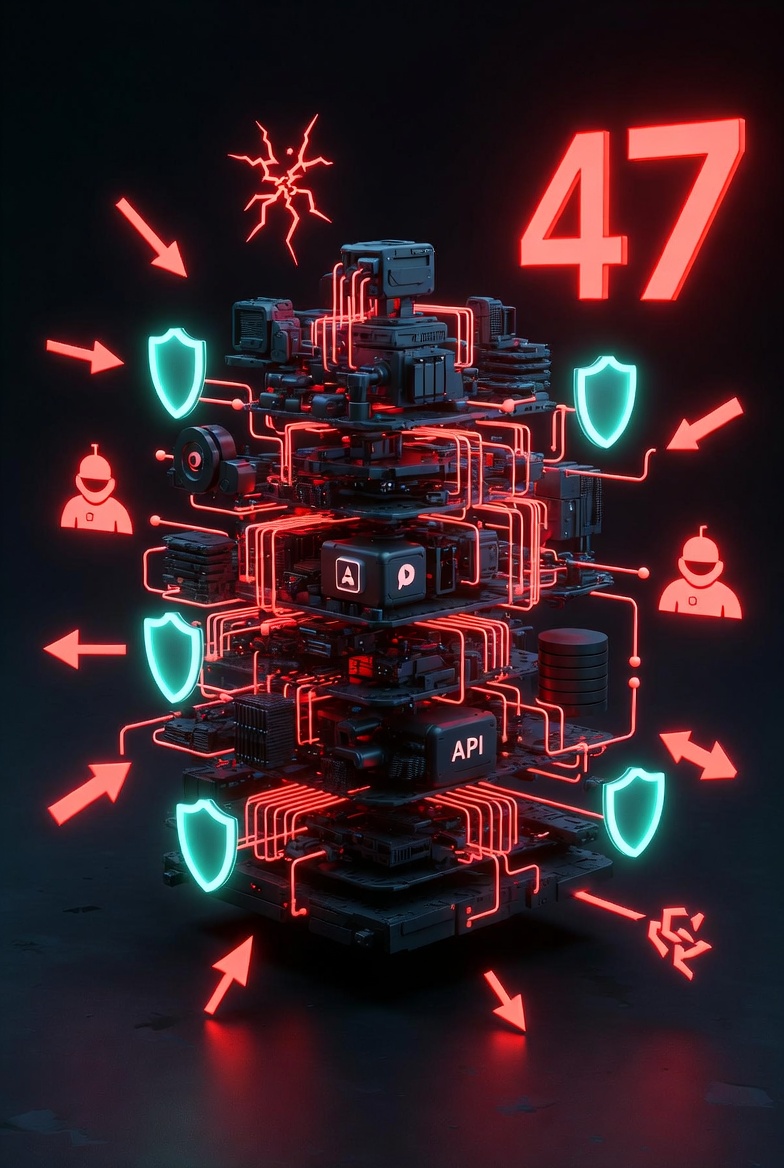
Your SaaS Stack Has 47 Attack Vectors — And You Only Know About 3
You run 20+ SaaS tools. Slack. GitHub. AWS. Google Workspace. Zoom. Jira. Notion. Each one is a potential backdoor.
Most security teams obsess over their crown jewel — the AWS production account, the customer database. Meanwhile, attackers walk through the side door. An expired API key in a forgotten Slack integration. An OAuth token with too much scope. An orphaned admin account in a tool nobody monitors.
Your security isn’t broken by a zero-day. It’s broken by a chain of three “low-risk” misconfigurations across different SaaS tools. Attackers connect the dots. Most defenders don’t.
The 47 Vectors — A Glimpse
Every SaaS tool in your stack introduces at least 2-3 unique attack vectors. Here’s a partial list of what pentesters look for:
That’s 12. Multiply by your 20+ tools. You get the point.
The Chain That Matters — Slack → GitHub → AWS
One misconfig is a nuisance. Three misconfigs in a chain is a breach. Here’s how attackers do it:
A developer posts a screenshot in an internal Slack channel. Hidden in the corner: a legacy GitHub integration token with `repo` and `admin:org` scopes.
→ Attacker monitors the channel. Token scraped.
The stolen token is used to create a new GitHub Action in a dormant repo. The action runs a script that fetches secrets from the organization’s action secrets store — including an AWS access key.
→ Attacker now has AWS keys.
The keys belong to a service account that was granted `AdministratorAccess` for a “temporary” test two years ago. No MFA. No alerts. The attacker spins up an EC2 instance, runs `aws s3 sync s3://customer-data-bucket ./` and walks away.
→ 4.2 million customer records exfiltrated. No one noticed for 14 days.
Slack token (public screenshot) + GitHub OAuth scope creep + AWS orphaned admin key = full infrastructure compromise.
Individually: three low-severity findings. Together: $4M in breach costs.
Why Most Pentests Miss This
- Scope limitation: “Only test the production app.” (Slack and GitHub are out of scope.)
- Tool fatigue: 47 vectors across 20 tools — no single scanner covers them all.
- Chain thinking: Automated tools don’t connect Slack token → GitHub Action → AWS.
- Human oversight: Attackers think in chains. Most pentesters think in checklists.
The Slack token wasn’t leaked by a hack. A developer took a screenshot. The GitHub Action wasn’t a vulnerability — it was a feature. The AWS key wasn’t stolen — it was forgotten.
Your SaaS stack is only as strong as your least disciplined engineer. And your least disciplined engineer just posted their API key to #random.
How To Pentest Your SaaS Stack (The Right Way)
1. Inventory everything
You can’t secure what you don’t track. Use Okta, Google Workspace, or a dedicated SaaS discovery tool to list every connected app.
2. Audit OAuth tokens and API keys
3. Hunt for orphaned accounts
Check every SaaS tool for users who left the company but still have active sessions. Attackers love dormant accounts — no one watches them, and they often have elevated privileges.
4. Test OAuth scope boundaries
Create a test OAuth app with the minimal scope. Try to escalate. You’ll be surprised how often “read-only” tokens can write.
5. Simulate a Slack-to-AWS chain
In a controlled environment, attempt to move from a compromised Slack token to cloud infrastructure. See how far you can go.
• 5 days of testing
• 20+ tools reviewed (SSO, OAuth, API keys, user directories)
• 3-5 chained attack paths documented
• 1 executive summary with “fix this first” priorities
Not a scanner report. A map of how an attacker moves through your stack.
The 2026 SaaS Attack Surface Shift
In the last 12 months, attackers have shifted from exploiting unpatched servers to abusing SaaS identities and integrations . AI agents now have OAuth tokens. Service accounts have MFA bypasses. CI/CD pipelines can push to production based on a GitHub comment.
Your perimeter is gone. Your SaaS stack is the new perimeter.
Run a SaaS access review. Remove every OAuth token, API key, and integration that hasn’t been used in 90 days. Remove every user who left the company. Turn off MFA bypass codes.
It won’t catch everything. But it will cut 80% of the low-hanging fruit.
The Bottom Line
Your SaaS stack has 47 attack vectors. You know about 3 — the shiny ones. The rest are hiding in Slack channels, stale GitHub tokens, and orphaned Okta accounts.
Attackers don’t break your security. They thread it — one small misconfig at a time, across tools you forgot existed.
Pentesting isn’t about finding the critical vuln. It’s about connecting the three “low-risk” findings before the attacker does.
Think your SaaS stack is secure?
Let me show you the 44 vectors you missed. Full SaaS pentest: $3,000. AI Red Team: $5,000. Security retainer: $1,500/month.
📩 DM @StackOfTruths on XFree 15-min consultation. No hard sell. Just honest answers about your SaaS attack surface.



















Leave a Reply